

Dua
Dua al-Kumayl
Taught by Imam Ali (a.s.) to his companion Kumayl ibn Ziyad; traditionally recited on Thursday nights for forgiveness and spiritual cleansing.
00:00...
It is a community center for all.
The Center is committed to preserving an Islamic heritage.
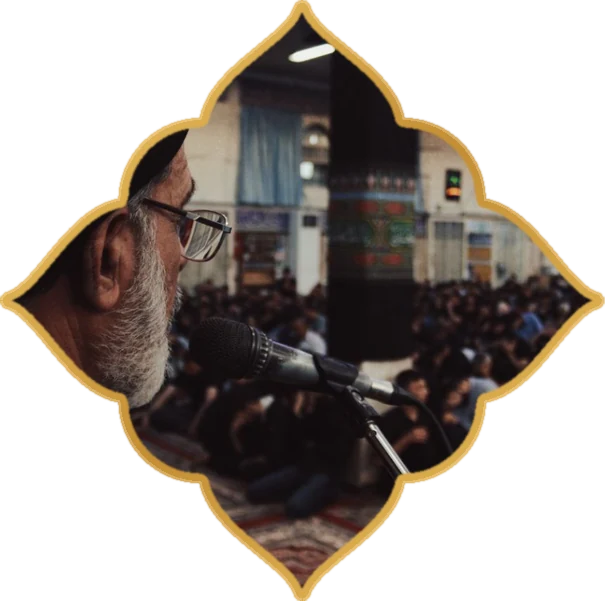
Shia Islamic Center is a home for our community: daily congregational prayers, Friday Jumu’ah, Dua Kumayl, Dua Nudba, Muharram majalis and programs for children and youth, all rooted in love for the Prophet ﷺ and his Ahl al-Bayt (a).
⌖ Your Venue, City◷ 9:30 am to 1:15 pm
EXPIREDProvide rehab facility dolor sit amet, consectetur adipisicing elit, sed do eiusmod tempor…
Provide rehab facility dolor sit amet, consectetur adipisicing elit, sed do eiusmod tempor…
Provide rehab facility dolor sit amet, consectetur adipisicing elit, sed do eiusmod tempor…
Provide rehab facility dolor sit amet, consectetur adipisicing elit, sed do eiusmod tempor…

Taught by Imam Ali (a.s.) to his companion Kumayl ibn Ziyad; traditionally recited on Thursday nights for forgiveness and spiritual cleansing.

A supplication seeking intercession (tawassul) through the Fourteen Infallibles: Prophet Muhammad, Fatima al-Zahra and the twelve Imams.
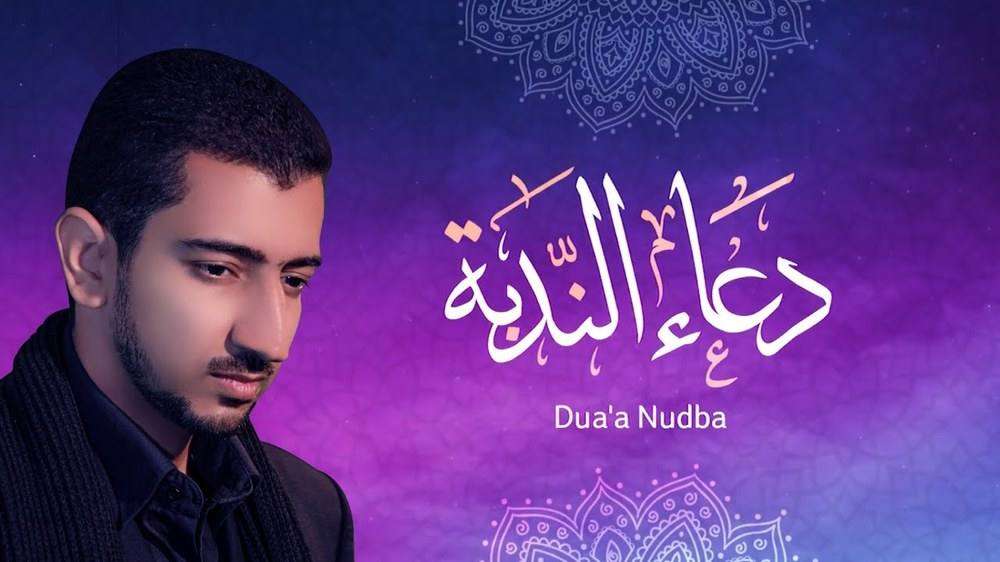
Recited on Friday mornings to mourn the occultation of Imam al-Mahdi (a.t.f.s.) and to pray for his reappearance.
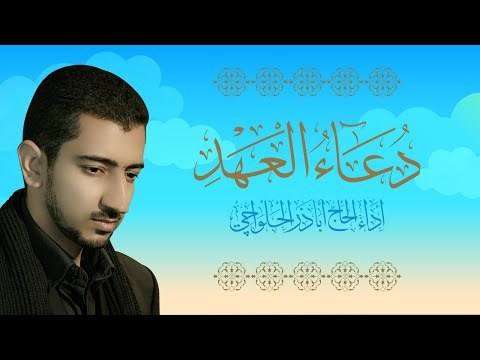
A covenant prayer recited every morning for 40 consecutive days to renew allegiance to the living Imam.

Known as the “Psalms of Islam”, a celebrated book of supplications authored by the fourth Imam, Ali ibn Husayn Zayn al-Abidin (a.s.).

A foundational salutation dedicated to Imam Husayn ibn Ali (a.s.), recited to commemorate the tragedy of Karbala and to stand against tyranny.

A famous pilgrimage text recited at the shrine of Imam Husayn (a.s.), tracing his inheritance from Adam, Noah, Abraham, Moses, Jesus and Muhammad.

A prominent salutation addressed to Imam al-Mahdi (a.t.f.s.), focusing on belief in the divine guidance of the Ahl al-Bayt.

A highly authentic text shared by Sunni and Shia sources, traditionally recited at the shrines of Imam Ali and other Imams.

A detailed Ziyarat attributed to Imam al-Mahdi (a.t.f.s.) describing the events of Ashura and mourning Imam Husayn (a.s.).
Explore the life and scholarly legacy of Imam Ja'far al-Sadiq (A.S.), the sixth Shia Imam, and his contributions to Islamic jurisprudence, Hadith, theology, and education.
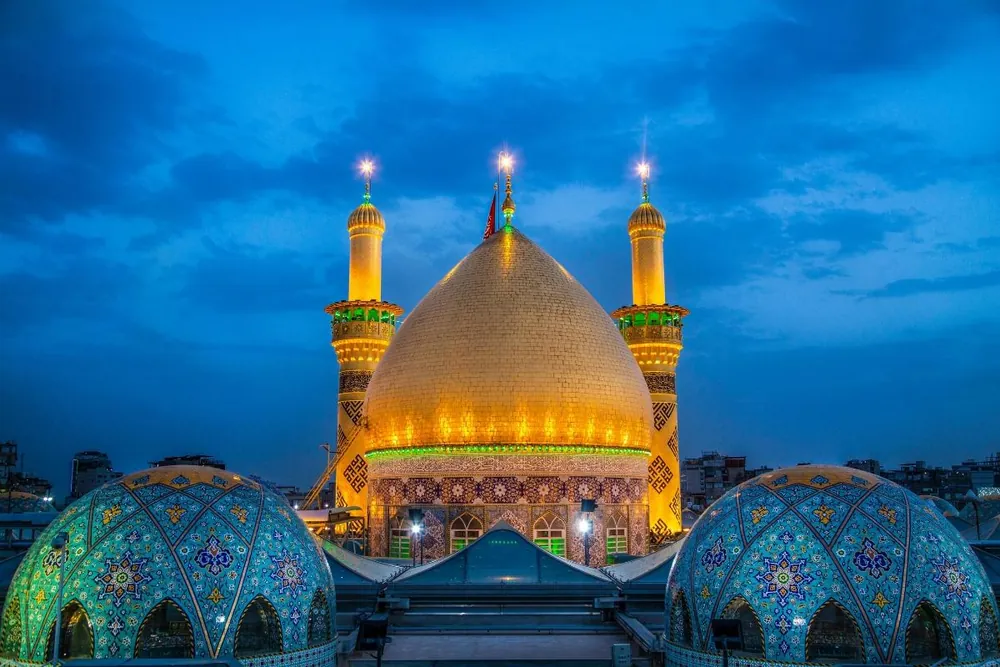
›Discover the complete story of Karbala, the sacrifice of Imam Hussain (A.S.), the tragedy of Ashura, and the timeless message of truth, justice, and faith.
›
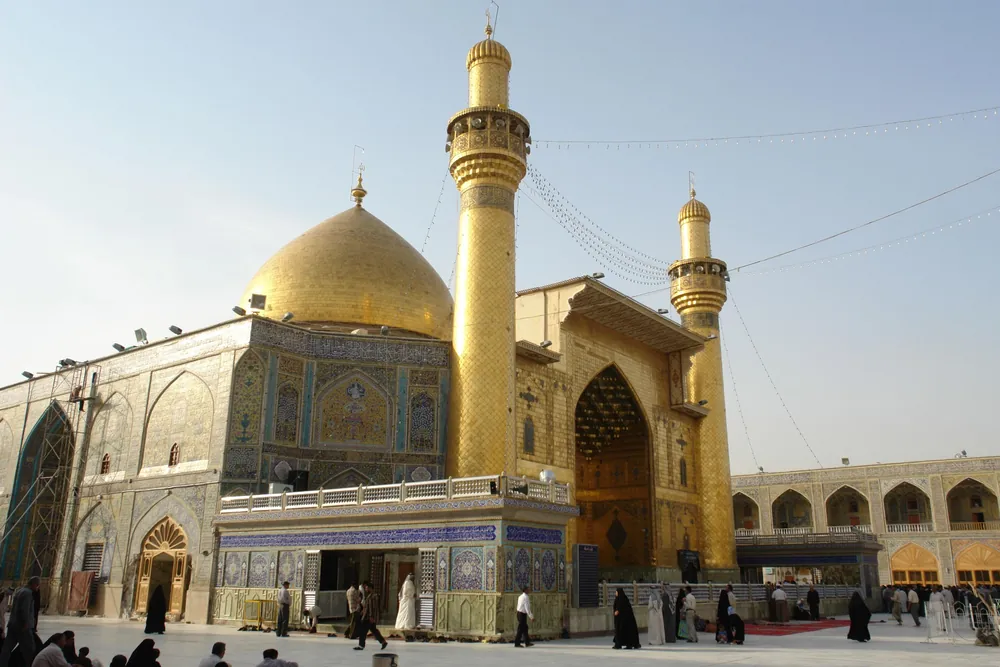
Discover the life, teachings, wisdom, and legacy of Imam Ali (A.S.), the first Imam in Shia Islam, and learn timeless lessons of justice, faith, and knowledge.
›Your donations will help our community rebuild the House of Allah and facilitate continued services to the community at large.
Donate Now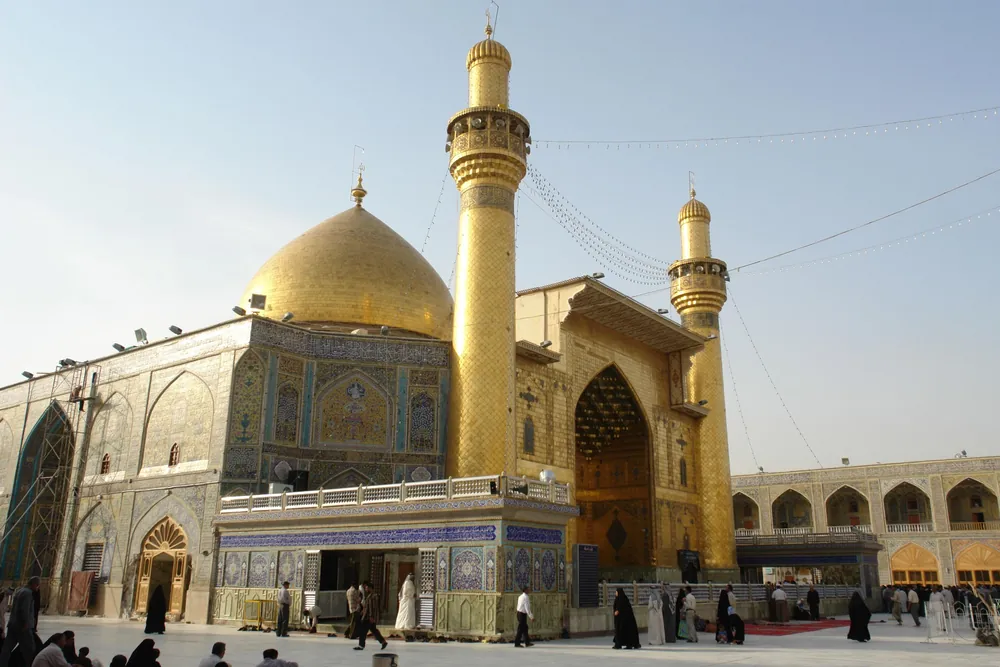
05 / 11 / 2026
Imam Ali ibn Abi Talib (A.S.) holds a distinguished place in Islamic history. He is revered by Shia Muslims as the first Imam and is widely respected for his profound knowledge, courage, devotion to Allah (SWT), and commitment to justice.
As the cousin and son-in-law of Prophet Muhammad (PBUH), Imam Ali (A.S.) was among the earliest believers in Islam. Throughout his life, he demonstrated the importance of faith, honesty, compassion, and standing firmly against injustice.
His teachings continue to guide millions of Muslims around the world. Through his words and actions, Imam Ali (A.S.) provided a powerful example of how to live a life dedicated to Allah and the service of humanity.
Imam Ali (A.S.) was born in Mecca on the 13th of Rajab, approximately 600 CE, into the respected family of Banu Hashim. His father was Abu Talib (A.S.), and his mother was Fatimah bint Asad (S.A.).
According to Shia tradition, Imam Ali (A.S.) was born inside the Holy Kaaba, an event regarded as a special honor.
From an early age, Imam Ali (A.S.) was closely associated with Prophet Muhammad (PBUH). He grew up under the care and guidance of the Prophet and developed a deep understanding of Islam.
When Prophet Muhammad (PBUH) began conveying the message of Islam, Imam Ali (A.S.) was among the first to accept his invitation.
His early life reflected the qualities that would define him: sincerity, courage, loyalty, and devotion to Allah (SWT).
Imam Ali (A.S.) shared a unique relationship with Prophet Muhammad (PBUH). He was not only his cousin and son-in-law but also a devoted companion who stood beside him during the most challenging moments of the early Islamic mission.
Imam Ali (A.S.) married Lady Fatimah al-Zahra (S.A.), the beloved daughter of Prophet Muhammad (PBUH). Their family included Imam Hasan (A.S.), Imam Hussain (A.S.), Lady Zainab (S.A.), and Umm Kulthum (S.A.).
Their household became an important example of faith, humility, and devotion.
One of the well-known traditions concerning Imam Ali (A.S.) is Hadith al-Thaqalayn, in which the Prophet emphasized the importance of holding firmly to the Quran and his Ahlul Bayt.
For Shia Muslims, this tradition highlights the spiritual authority and significance of the Ahlul Bayt (A.S.) in guiding the Muslim community.
In Shia Islam, Imam Ali (A.S.) is recognized as the first Imam after Prophet Muhammad (PBUH).
Shia Muslims believe that his appointment as the successor to the Prophet was declared at Ghadir Khumm, where the Prophet delivered a significant sermon concerning Imam Ali (A.S.).
The event of Ghadir Khumm is commemorated by Shia Muslims on the 18th of Dhul Hijjah as Eid al-Ghadir.
Imam Ali (A.S.) is revered for his spiritual leadership, deep understanding of the Quran, and ability to guide people through wisdom and justice.
His life demonstrates that leadership is not simply about authority or power. True leadership requires responsibility, humility, compassion, and service to others.
Imam Ali (A.S.) became the fourth caliph in the historical succession recognized by Sunni Muslims and the first Imam in Shia belief.
During his period of leadership, he faced significant political and social challenges. Despite these difficulties, he emphasized justice, accountability, and the protection of the rights of the people.
His approach to governance reflected a strong commitment to fairness. He believed that rulers should be accountable for their actions and should never misuse their authority.
Imam Ali (A.S.) encouraged leaders to treat people equally, regardless of their wealth, social status, or background.
His principles of governance remain relevant to discussions about ethical leadership and social justice.
The teachings of Imam Ali (A.S.) offer valuable guidance for personal development, spirituality, and social responsibility.
Justice was one of the central principles of Imam Ali's (A.S.) life.
He believed that people should be treated fairly and that no individual should be deprived of their rights.
His leadership emphasized equality before the law and the responsibility of those in authority to protect the vulnerable.
The lesson from his life is clear: justice should never be sacrificed for personal benefit, political influence, or wealth.
Imam Ali (A.S.) is widely celebrated for his profound knowledge and wisdom.
His teachings emphasize the importance of learning, reflection, and understanding.
He encouraged people to seek knowledge throughout their lives and to use that knowledge for the benefit of society.
In the Islamic tradition, knowledge is not merely about collecting information. It should also improve one's character and bring a person closer to Allah (SWT).
Despite his exceptional status and leadership, Imam Ali (A.S.) demonstrated humility.
He valued good manners, honesty, patience, and respect for others.
His life teaches Muslims that a person's true worth is not determined by wealth, position, or popularity, but by faith and character.
Imam Ali (A.S.) emphasized caring for the poor, orphans, and those facing hardship.
He believed that society has a responsibility to protect people who are vulnerable.
His actions reflected a commitment to helping those in need without expecting recognition or reward.
This teaching encourages Muslims to practice generosity, charity, and compassion in their daily lives.
Imam Ali (A.S.) taught the importance of patience, especially during difficult circumstances.
He encouraged people to control their anger, avoid unnecessary conflict, and respond to challenges with wisdom.
Patience does not mean accepting injustice. Rather, it means maintaining faith and making thoughtful decisions while facing hardship.
Imam Ali's (A.S.) life was deeply rooted in devotion to Allah.
His prayers and teachings reflect a strong understanding of the relationship between human beings and their Creator.
He encouraged people to remain sincere in worship, seek forgiveness, and remember that worldly life is temporary.
His example reminds Muslims that spiritual growth requires both worship and good actions.
One of the most important works associated with Imam Ali (A.S.) is Nahj al-Balagha.
The collection was compiled by Sharif al-Radi in the 10th–11th century CE. It contains sermons, letters, and sayings attributed to Imam Ali (A.S.).
Nahj al-Balagha addresses a wide range of subjects, including:
The work is highly regarded in Shia Islamic scholarship and is also studied by many others interested in Islamic philosophy, ethics, and literature.
Readers are encouraged to study Nahj al-Balagha with reliable translations and scholarly explanations to understand its historical and spiritual context.
Imam Ali (A.S.) was struck with a sword while praying in the mosque of Kufa during the month of Ramadan.
The attack occurred on the 19th of Ramadan, 40 AH, and he passed away on the 21st of Ramadan, 40 AH, corresponding to approximately 661 CE.
His martyrdom is remembered by Shia Muslims as a deeply significant event.
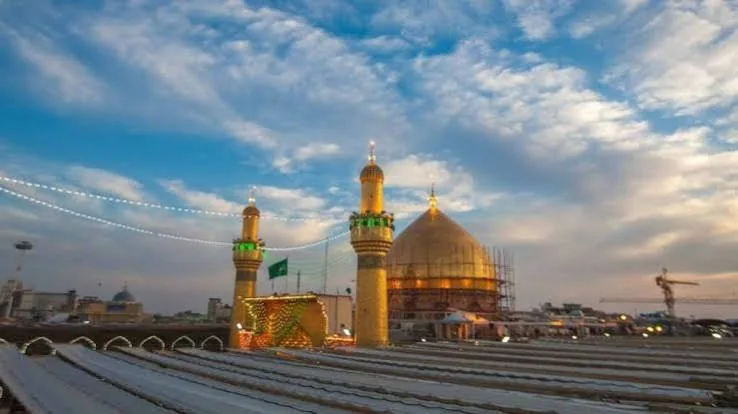
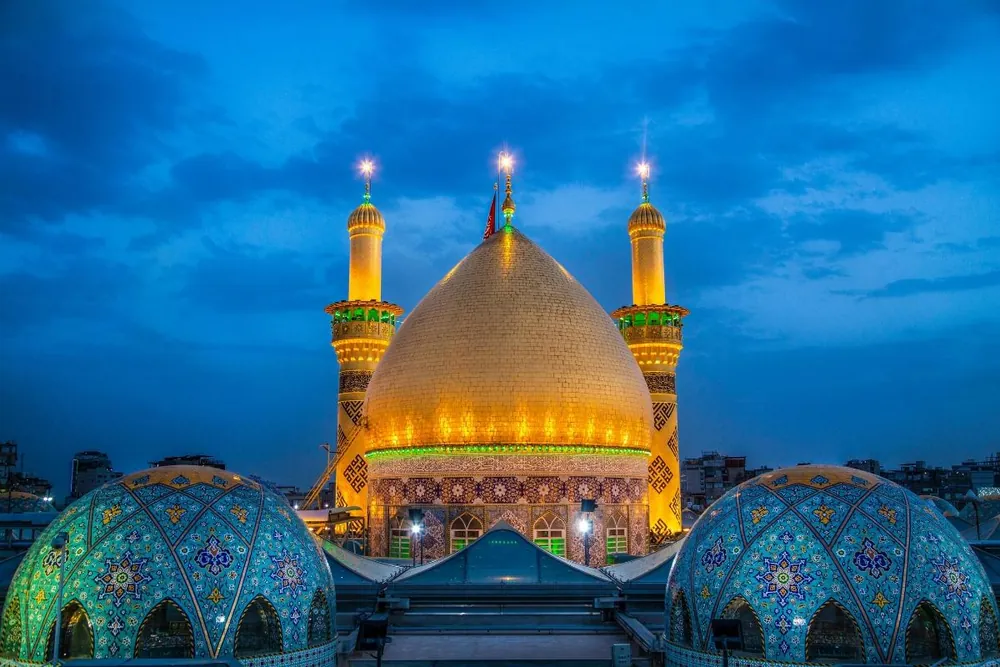
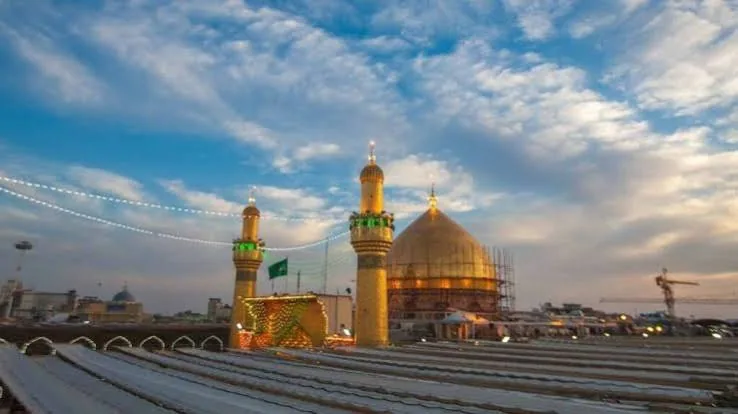
Imam Ali (A.S.) was buried in Najaf, Iraq, where the magnificent Shrine of Imam Ali stands today.
His final days and martyrdom remain a powerful reminder of his devotion to Allah (SWT), his commitment to justice, and his dedication to the principles of Islam.
The life of Imam Ali (A.S.) offers timeless lessons for Muslims and all those seeking to develop a better character.
Some of the most important lessons include:
These lessons demonstrate that the legacy of Imam Ali (A.S.) is not limited to historical events. His teachings provide practical guidance for everyday life.
Imam Ali ibn Abi Talib (A.S.) remains one of the most influential and respected figures in Islamic history.
His life was characterized by devotion to Allah (SWT), loyalty to Prophet Muhammad (PBUH), commitment to justice, and compassion for humanity.
As the first Imam in Shia Islam, his teachings continue to inspire Muslims to seek knowledge, develop good character, and uphold the principles of faith.
By studying his life and reflecting on his wisdom, we can learn how to become more responsible, compassionate, and spiritually conscious individuals.
May Allah (SWT) grant us the ability to follow the teachings of Imam Ali (A.S.) and remain steadfast on the path of truth.
Ya Ali (A.S.)!
Imam Ali (A.S.) is the first Imam in Shia Islam. He was the cousin and son-in-law of Prophet Muhammad (PBUH) and is revered for his knowledge, courage, justice, and devotion to Allah.
According to Shia tradition, Imam Ali (A.S.) was born on the 13th of Rajab, approximately 600 CE, in Mecca.
His teachings emphasize justice, knowledge, humility, compassion, patience, faith in Allah, and ethical leadership.
Nahj al-Balagha is a collection of sermons, letters, and sayings attributed to Imam Ali (A.S.), compiled by Sharif al-Radi.
Imam Ali (A.S.) is buried in Najaf, Iraq, at the Shrine of Imam Ali.
Shia Muslims commemorate his martyrdom on the 21st of Ramadan.
05 / 11 / 2026
The story of Karbala is one of the most significant and emotional events in Islamic history. It is a story of faith, sacrifice, courage, and the struggle between truth and injustice.
On the 10th of Muharram, 61 AH (10 October 680 CE), Imam Hussain ibn Ali (A.S.), the beloved grandson of Prophet Muhammad (PBUH), was martyred in the plains of Karbala, in present-day Iraq.
Imam Hussain (A.S.) stood against the rule of Yazid ibn Muawiyah, refusing to give allegiance to a leadership that he considered unjust. Alongside his family and a small group of loyal companions, he faced a much larger army.
The tragedy of Karbala resulted in the martyrdom of Imam Hussain (A.S.), members of his family, and his companions. The surviving members of his family, including Lady Zainab (S.A.) and Imam Zainul Abideen (A.S.), were taken captive.
For Shia Muslims, Karbala is not merely a historical battle. It is a powerful symbol of standing for truth, protecting human dignity, and remaining faithful to Allah (SWT) even in the face of overwhelming hardship.
To understand the tragedy of Karbala, it is important to understand the political situation in the Muslim world following the passing of Prophet Muhammad (PBUH).
After the Prophet's death in 632 CE, the Muslim community experienced several changes in leadership. Eventually, Muawiyah ibn Abi Sufyan established the Umayyad rule.
After Muawiyah's death in 680 CE, his son Yazid became the ruler.
Yazid sought allegiance from prominent figures in the Muslim community, including Imam Hussain (A.S.).
In Shia understanding, Imam Hussain (A.S.) believed that accepting Yazid's leadership would compromise the principles of Islam and the responsibility to uphold justice.
Imam Hussain (A.S.) therefore refused to give allegiance.
His refusal became a defining moment in Islamic history, setting the stage for the events that would unfold in Karbala.
Following the demand for allegiance, Imam Hussain (A.S.) left Madinah and traveled to Makkah.
He chose not to remain in a situation where he might be forced to accept a leadership he opposed.
During his stay in Makkah, Imam Hussain (A.S.) received numerous letters from the people of Kufa, a city in Iraq.
The people of Kufa expressed their support for Imam Hussain (A.S.) and invited him to come to their city. They promised to stand with him and recognize his leadership.
These letters played an important role in his decision to consider traveling toward Iraq.
Imam Hussain (A.S.) sent his trusted representative, Muslim ibn Aqil (A.S.), to Kufa to assess the situation and determine whether the people were truly prepared to support him.
Muslim ibn Aqil (A.S.) arrived in Kufa and initially received support from many residents.
However, the political situation changed when Ubayd Allah ibn Ziyad was appointed governor of Kufa by Yazid.
Ibn Ziyad used intimidation, political pressure, and force to suppress the supporters of Imam Hussain (A.S.).
As the situation deteriorated, Muslim ibn Aqil (A.S.) was left without the support he had initially received.
He was eventually arrested and martyred.
His martyrdom was a devastating development for Imam Hussain (A.S.) and his supporters.
Despite the growing danger, Imam Hussain (A.S.) continued his journey toward Iraq.
Imam Hussain (A.S.) departed Makkah in the direction of Kufa with members of his family and a group of companions.
His caravan included women, children, and devoted followers.
During the journey, Imam Hussain (A.S.) received news about the martyrdom of Muslim ibn Aqil (A.S.) and the changing political situation in Kufa.
The journey became increasingly difficult as the caravan encountered forces sent by the Umayyad authorities.
Eventually, Imam Hussain (A.S.) and his companions were prevented from continuing toward Kufa.
They were directed toward the plain of Karbala.
On the 2nd of Muharram, 61 AH, Imam Hussain (A.S.) and his caravan arrived in Karbala.
The place that would become one of the most sacred sites in Shia Islam was now the setting of a tragic confrontation.
When Imam Hussain (A.S.) arrived in Karbala, the forces of the Umayyad government began surrounding his camp.
The opposing army was commanded by Umar ibn Sa'd, under the authority of Ubayd Allah ibn Ziyad.
Imam Hussain (A.S.) and his companions were greatly outnumbered.
The Imam attempted to resolve the situation through dialogue and sought to avoid unnecessary bloodshed.
According to historical accounts, he proposed alternatives, including being allowed to return from the confrontation.
However, the opposing authorities demanded that he submit to Yazid's rule.
Imam Hussain (A.S.) refused to surrender his principles.
The situation became increasingly severe as the days passed.
One of the most painful aspects of the tragedy of Karbala was the restriction of access to water.
The camp of Imam Hussain (A.S.) was situated near the Euphrates River, yet the opposing forces prevented his family and companions from accessing it.
Women, children, and the companions endured severe thirst.
The restriction of water became a symbol of the cruelty and injustice faced by Imam Hussain (A.S.) and his camp.
Among those remembered for his devotion to securing water for the camp is Hazrat Abbas ibn Ali (A.S.), the brother of Imam Hussain (A.S.).
His loyalty and sacrifice remain central to the remembrance of Karbala.
The night of the 9th of Muharram is remembered as one of the most significant moments in the story of Karbala.
Imam Hussain (A.S.) gathered his companions and informed them that the confrontation was approaching.
He gave his companions the opportunity to leave, explaining that the opposing forces were primarily seeking him.
However, his companions refused to abandon him.
They expressed their willingness to sacrifice their lives rather than leave the Imam alone.
This moment reflects the extraordinary loyalty, faith, and courage of the companions of Imam Hussain (A.S.).
The night was spent in prayer, worship, and preparation for the events of the following day.
For Shia Muslims, this night represents the strength of faith and the importance of remaining steadfast in difficult circumstances.
The 10th of Muharram, known as Ashura, became one of the most significant days in Islamic history.
On this day, the forces of the Umayyad government confronted Imam Hussain (A.S.) and his companions.
The army facing Imam Hussain (A.S.) was much larger than his small group of supporters.
Despite the overwhelming numbers, Imam Hussain (A.S.) and his companions remained committed to their principles.
The battle unfolded throughout the day.
One by one, the companions of Imam Hussain (A.S.) were martyred.
Among the figures remembered in the tragedy of Karbala are:
The sacrifice of each companion represents an important part of the history and remembrance of Karbala.
The events of Ashura are remembered not only for the loss of life but also for the courage and faith demonstrated by those who stood with Imam Hussain (A.S.).
Hazrat Abbas ibn Ali (A.S.) was the brother of Imam Hussain (A.S.) and one of the most devoted companions of the Imam.
He is remembered for his courage, loyalty, and commitment to protecting the family of the Prophet.
During the tragedy of Karbala, Hazrat Abbas (A.S.) undertook the difficult task of seeking water for the camp.
His sacrifice is especially remembered because of the suffering endured by the children and women of Imam Hussain's (A.S.) camp.
Hazrat Abbas (A.S.) was martyred on the day of Ashura.
His life continues to inspire Muslims with the values of loyalty, sacrifice, and devotion.
The shrine of Hazrat Abbas (A.S.) stands in Karbala, near the shrine of Imam Hussain (A.S.).
Ali Akbar ibn Hussain (A.S.) was the son of Imam Hussain (A.S.).
He is remembered for his courage, noble character, and devotion to his father.
On the day of Ashura, Ali Akbar (A.S.) sought permission from Imam Hussain (A.S.) to enter the battlefield.
He fought bravely and was eventually martyred.
His martyrdom was a profound loss for Imam Hussain (A.S.), who had witnessed the suffering and sacrifice of his family and companions throughout the day.
Ali Akbar (A.S.) remains an important figure in the remembrance of Karbala, especially as an example of devotion, courage, and sacrifice.
Qasim ibn Hasan (A.S.) was the son of Imam Hasan (A.S.) and the nephew of Imam Hussain (A.S.).
He was among the young members of the family who stood with Imam Hussain (A.S.) at Karbala.
Qasim (A.S.) is remembered for his willingness to sacrifice himself in defense of the Imam and the principles of Islam.
His martyrdom is commemorated during the observances of Muharram.
His story reflects the courage and faith of the younger members of Imam Hussain's (A.S.) family.
As the day of Ashura progressed, the companions and members of Imam Hussain's (A.S.) family were martyred.
Eventually, Imam Hussain (A.S.) remained among the final defenders of his camp.
He continued to stand firmly against the opposing army.
According to Shia historical tradition, Imam Hussain (A.S.) was martyred on the 10th of Muharram, 61 AH.
His martyrdom became the central event of the tragedy of Karbala.
For Shia Muslims, Imam Hussain's (A.S.) sacrifice represents the refusal to surrender truth and justice in the face of oppression.
His stand is remembered as a powerful expression of faith and moral responsibility.
Lady Zainab bint Ali (S.A.) was the sister of Imam Hussain (A.S.) and the daughter of Imam Ali (A.S.) and Lady Fatimah al-Zahra (S.A.).
She played a crucial role in preserving the message of Karbala.
After the martyrdom of Imam Hussain (A.S.), Lady Zainab (S.A.) cared for the surviving members of the family, including the children and the ill Imam Zainul Abideen (A.S.).
She and the surviving family members were taken captive and brought to Kufa and later to Damascus.
During this journey, Lady Zainab (S.A.) demonstrated extraordinary courage.
Her speeches are remembered for their strength, dignity, and defense of the principles for which Imam Hussain (A.S.) had sacrificed his life.
Through her words and actions, she ensured that the tragedy of Karbala would not be forgotten.
Her role is a powerful reminder that courage is not limited to the battlefield. Speaking the truth and preserving the message of justice are also forms of strength.
Imam Ali ibn Hussain, known as Imam Zainul Abideen (A.S.), was the son of Imam Hussain (A.S.) and the fourth Imam in Shia Islam.
He was present in Karbala but was unable to participate in the battle because of illness.
After the martyrdom of Imam Hussain (A.S.), he became one of the central figures responsible for preserving the teachings and legacy of the Ahlul Bayt (A.S.).
His spiritual teachings, prayers, and devotion to Allah (SWT) became an important part of Shia Islamic tradition.
He is especially associated with Sahifa Sajjadiya, a collection of supplications attributed to him.
His life demonstrates that the message of Karbala continued through spiritual guidance, knowledge, and the preservation of truth.
Following the martyrdom of Imam Hussain (A.S.), the surviving family members were taken captive.
The captives included Lady Zainab (S.A.), Imam Zainul Abideen (A.S.), and other members of the family.
They were taken to Kufa and later to Damascus.
Their journey was marked by hardship and grief.
Despite their suffering, the survivors continued to communicate the message of Imam Hussain (A.S.) and the injustice of what had occurred.
The speeches and actions of Lady Zainab (S.A.) and Imam Zainul Abideen (A.S.) played a significant role in preserving the memory of Karbala.
Their resilience ensured that the sacrifice of Imam Hussain (A.S.) would continue to be remembered by future generations.
Arbaeen is observed on the 20th of Safar, marking forty days after the martyrdom of Imam Hussain (A.S.).
It is one of the most important occasions in Shia Islam.
Arbaeen is associated with remembrance, mourning, reflection, and devotion.
Many Shia Muslims travel to Karbala to visit the shrine of Imam Hussain (A.S.).
The Arbaeen pilgrimage has become one of the world's largest annual religious gatherings.
For many pilgrims, the journey represents a commitment to the values of Imam Hussain (A.S.), including justice, compassion, sacrifice, and faith.
Arbaeen also serves as a reminder that the message of Karbala continues to inspire people across generations and communities.
The story of Karbala is not only about a historical tragedy. It also offers important lessons for everyday life.
Imam Hussain (A.S.) demonstrated that truth should not be abandoned for political power or personal benefit.
Karbala teaches that injustice must be recognized and challenged through principled action.
The devotion of Imam Hussain (A.S.) and his companions reminds Muslims of the importance of maintaining faith during hardship.
The suffering of the family of Imam Hussain (A.S.) encourages people to show kindness and compassion toward others.
The events of Karbala demonstrate that courage is not measured by numbers or physical strength. It is measured by the willingness to remain committed to one's principles.
The role of Lady Zainab (S.A.) and Imam Zainul Abideen (A.S.) highlights the importance of speaking truthfully and preserving the memory of injustice.
The tragedy of Karbala remains one of the most significant events in Islamic history.
Imam Hussain (A.S.) stood for truth, justice, and the principles of Islam, even when faced with overwhelming opposition.
His companions demonstrated extraordinary loyalty and courage. His family endured immense suffering, yet continued to preserve his message.
Lady Zainab (S.A.) and Imam Zainul Abideen (A.S.) ensured that the sacrifice of Karbala would remain known to future generations.
For Shia Muslims, the remembrance of Imam Hussain (A.S.) is an expression of love, faith, and commitment to the values of the Ahlul Bayt (A.S.).
The message of Karbala continues to inspire people to stand against injustice, practice compassion, and remain faithful to Allah (SWT).
May Allah (SWT) grant us the ability to understand the message of Imam Hussain (A.S.) and follow the path of truth and justice.
Ya Hussain (A.S.)!
The Battle of Karbala took place on 10 Muharram, 61 AH (10 October 680 CE). Imam Hussain (A.S.) and his companions were confronted by forces of the Umayyad government. Imam Hussain (A.S.), members of his family, and his companions were martyred.
Imam Hussain (A.S.) received invitations from the people of Kufa and traveled toward Iraq. His journey was interrupted by forces of the Umayyad government, and his caravan was directed to Karbala.
Karbala is important because it represents the sacrifice of Imam Hussain (A.S.) and his stand for justice, truth, and the principles of Islam.
The Battle of Karbala took place on 10 Muharram, 61 AH, corresponding to 10 October 680 CE.
Among the prominent survivors were Imam Zainul Abideen (A.S.), Lady Zainab (S.A.), and other members of Imam Hussain's (A.S.) family.
Ashura is the 10th day of Muharram. Shia Muslims commemorate the martyrdom of Imam Hussain (A.S.) on this day.
Arbaeen is observed forty days after Ashura, on the 20th of Safar. It is a day of remembrance and pilgrimage associated with Imam Hussain (A.S.).
05 / 11 / 2026
Imam Ja'far ibn Muhammad al-Sadiq (A.S.) is one of the most influential figures in the history of Islamic scholarship. Revered by Shia Muslims as the sixth Imam, he is widely respected for his knowledge, piety, intellectual contributions, and dedication to teaching.
Living during a period of significant political and intellectual change, Imam Ja'far al-Sadiq (A.S.) became a prominent religious authority in Madinah. His teachings contributed to the development of Islamic jurisprudence, theology, Hadith studies, and religious education.
In Shia Islam, his scholarly legacy holds a particularly important position. The Ja'fari school of Islamic jurisprudence is named after him, reflecting the central role of his reported teachings in the development of Imami Shia law.
His influence also extended beyond Shia communities. Many Muslim scholars recognized his learning and transmitted traditions from him.
The life of Imam Ja'far al-Sadiq (A.S.) offers an enduring example of the importance of knowledge, intellectual discipline, faith, and the pursuit of truth.
Imam Ja'far al-Sadiq (A.S.) was born in Madinah in the year 83 AH, commonly corresponding to approximately 702 CE, according to many traditional accounts.
His father was Imam Muhammad al-Baqir (A.S.), the fifth Imam in Twelver Shia Islam, and his mother was Umm Farwah.
Imam Ja'far al-Sadiq (A.S.) belonged to the noble family of Prophet Muhammad (PBUH). His lineage connected him to the Prophet through Imam Ali (A.S.) and Lady Fatimah al-Zahra (S.A.).
From an early age, he grew up in an environment of religious learning and spiritual guidance.
His father, Imam Muhammad al-Baqir (A.S.), was known for his deep understanding of Islamic knowledge. Under his guidance, Imam Ja'far al-Sadiq (A.S.) developed a strong foundation in the Quran, Hadith, and Islamic teachings.
This early education played an important role in shaping his later contributions to Islamic scholarship.
In Shia Islam, Imam Ja'far al-Sadiq (A.S.) is recognized as the sixth Imam after the passing of his father.
His period of Imamate coincided with the final years of the Umayyad dynasty and the emergence of the Abbasid caliphate.
These were times of political instability, social change, and growing intellectual activity across the Muslim world.
Despite the challenges of his era, Imam Ja'far al-Sadiq (A.S.) devoted significant attention to teaching and the preservation of religious knowledge.
His scholarly activities helped establish a strong intellectual foundation for the Imami Shia community.
Rather than focusing exclusively on political authority, he emphasized religious education, spiritual development, and the transmission of knowledge.
For Shia Muslims, his leadership represents the continuation of the guidance of the Ahlul Bayt (A.S.).
One of the most significant contributions of Imam Ja'far al-Sadiq (A.S.) was his role in the development of Islamic jurisprudence.
The Ja'fari school of Islamic law takes its name from him.
Ja'fari jurisprudence is associated with the legal teachings transmitted from Imam Ja'far al-Sadiq (A.S.) and the other Imams of the Ahlul Bayt (A.S.).
It addresses the practical aspects of Islamic life, including:
The teachings attributed to Imam Ja'far al-Sadiq (A.S.) became a major source for later Shia jurists.
His scholarly legacy helped shape the principles and methods through which Islamic law was understood and transmitted within the Imami tradition.
It is important to recognize that Ja'fari jurisprudence developed through generations of scholarship. It is not limited to the teachings of a single individual, but reflects the broader guidance attributed to the Ahlul Bayt (A.S.).
Hadith refers to the reported sayings, actions, and approvals of Prophet Muhammad (PBUH).
The preservation and interpretation of Hadith are essential parts of Islamic scholarship.
Imam Ja'far al-Sadiq (A.S.) is an important figure in the transmission of Islamic traditions.
Numerous reports attributed to him are preserved in Shia Hadith collections, including Al-Kafi, compiled by Muhammad ibn Ya'qub al-Kulayni.
These traditions cover a wide range of subjects:
His reported teachings became an important source of religious guidance for Shia scholars.
The study of these traditions also encouraged later scholars to develop methods of evaluating narrators, examining chains of transmission, and interpreting religious reports.
Islamic theology, known as Ilm al-Kalam, deals with questions concerning faith, the nature of Allah, divine justice, human responsibility, and religious authority.
Imam Ja'far al-Sadiq (A.S.) is an important figure in the development of Shia theological thought.
His reported teachings address subjects such as:
The belief in the absolute oneness of Allah (SWT) is central to Islam.
Imam Ja'far al-Sadiq (A.S.) emphasized the importance of understanding Allah's uniqueness and avoiding any belief that compromises His divine unity.
The concept of Adalat, or divine justice, holds a significant position in Shia theology.
The teachings attributed to Imam Ja'far al-Sadiq (A.S.) contributed to discussions about Allah's justice and the moral responsibility of human beings.
Questions about human freedom and divine power were widely discussed during his era.
His reported teachings contributed to the development of theological discussions concerning human actions, responsibility, and divine guidance.
In Shia belief, Imamate is the divinely appointed leadership of the Ahlul Bayt (A.S.) after Prophet Muhammad (PBUH).
Imam Ja'far al-Sadiq (A.S.) played a central role in the development and explanation of Imami teachings concerning the authority and spiritual guidance of the Imams.
Imam Ja'far al-Sadiq (A.S.) is remembered for his dedication to teaching and the development of an intellectual community.
Madinah became an important center of learning during his lifetime.
Students and scholars associated with different intellectual traditions were interested in his knowledge.
His reported teachings demonstrate the importance of asking questions, understanding religious principles, and seeking knowledge through careful study.
In Islamic tradition, knowledge is not simply the collection of facts. It is meant to improve a person's understanding, character, and relationship with Allah (SWT).
The scholarly legacy of Imam Ja'far al-Sadiq (A.S.) encourages Muslims to value education and intellectual development.
His example remains relevant to Islamic schools, seminaries, universities, and educational institutions today.
Imam Ja'far al-Sadiq (A.S.) is respected across several Islamic intellectual traditions.
His reputation as a scholar and transmitter of Hadith extended beyond the Shia community.
He is associated in historical and biographical literature with prominent scholars of his era, including Imam Malik ibn Anas and Abu Hanifa.
However, the precise details of their relationships and the extent of their studies with him vary across historical accounts.
His influence demonstrates the importance of scholarly exchange in the early Islamic world.
Islamic scholarship developed through the efforts of many teachers, students, jurists, and transmitters of knowledge.
Imam Ja'far al-Sadiq (A.S.) remains an especially significant figure in this broader intellectual history.
The legacy of Imam Ja'far al-Sadiq (A.S.) continued long after his passing.
His teachings became a major source for later Shia scholars, particularly in the areas of jurisprudence, Hadith, and theology.
Several important Islamic works preserve traditions attributed to him.
Al-Kafi is one of the most important collections of Shia Hadith.
Compiled by Muhammad ibn Ya'qub al-Kulayni, it contains traditions concerning Islamic beliefs, religious practices, and moral teachings.
Imam Ja'far al-Sadiq (A.S.) is a prominent source within the collection.
This work was compiled by Shaykh al-Tusi and is one of the major Shia Hadith collections focused on jurisprudence.
It preserves traditions used in the study of Islamic law.
Also compiled by Shaykh al-Tusi, this collection examines traditions related to Islamic legal questions.
Together, these works demonstrate the importance of Hadith transmission and scholarly interpretation in the development of Shia Islamic jurisprudence.
It should be noted that these collections were compiled by later scholars. They are not books personally authored by Imam Ja'far al-Sadiq (A.S.).
Imam Ja'far al-Sadiq (A.S.) passed away in Madinah in 148 AH, corresponding to approximately 765 CE.
He was buried in the historic Jannat al-Baqi cemetery in Madinah.
His passing marked the end of a significant period in the history of the Ahlul Bayt (A.S.).
In Twelver Shia Islam, he was succeeded by his son Imam Musa al-Kazim (A.S.), the seventh Imam.
The scholarly and spiritual legacy of Imam Ja'far al-Sadiq (A.S.) continued through the teachings of his successors and the generations of scholars who preserved his traditions.
His life remains an enduring example of devotion, knowledge, and the responsibility of preserving religious guidance.
The life and teachings of Imam Ja'far al-Sadiq (A.S.) offer valuable lessons for Muslims today.
His scholarly example encourages people to continue learning and improving their understanding of religion and the world.
Religious belief should be accompanied by reflection, sincerity, and a commitment to understanding Islamic teachings.
The preservation of religious knowledge requires dedicated teachers, careful study, and responsible interpretation.
Knowledge should lead to humility, honesty, patience, and compassion.
The study of Islamic history and Hadith requires attention to sources, context, and scholarly evaluation.
Education is a responsibility. Sharing religious knowledge should be done with accuracy, respect, and a sincere intention to benefit others.
Imam Ja'far al-Sadiq (A.S.) occupies a distinguished place in Islamic history.
As the sixth Imam in Shia Islam, he contributed significantly to the development of Islamic jurisprudence, Hadith transmission, theology, and religious education.
His teachings became a major foundation for Ja'fari jurisprudence and continue to guide Shia Muslims around the world.
His scholarly influence also reflects the wider importance of the Ahlul Bayt (A.S.) in the intellectual and spiritual history of Islam.
The life of Imam Ja'far al-Sadiq (A.S.) reminds us that faith and knowledge are deeply connected.
By studying his teachings, Muslims can strengthen their understanding of Islam, develop better character, and continue the pursuit of knowledge.
May Allah (SWT) grant us the ability to benefit from the wisdom and teachings of Imam Ja'far al-Sadiq (A.S.).
Ya Ja'far al-Sadiq (A.S.)!
Imam Ja'far al-Sadiq (A.S.) was the sixth Imam in Twelver Shia Islam and a prominent Islamic scholar known for his contributions to jurisprudence, Hadith, theology, and education.
Ja'fari jurisprudence is named after him because the traditions and legal teachings attributed to him form a major source of Imami Shia Islamic law.
Many traditional accounts place his birth in Madinah in 83 AH, approximately 702 CE.
He passed away in Madinah in 148 AH, approximately 765 CE.
He is buried in Jannat al-Baqi cemetery in Madinah, Saudi Arabia.
He is an important figure in the development of Ja'fari jurisprudence, the transmission of Hadith, Shia theology, and Islamic education.
Important Shia Hadith collections that preserve traditions attributed to him include Al-Kafi, Tahdhib al-Ahkam, and Al-Istibsar.